
Actionable Insights from the Demographic Study
New Year, New Data
The 2024–25 Broadway League’s Demographic Report offers useful insights that can help producers, GMs, and agencies be more efficient and strategic in deploying advertising investments. It can also be a practical tool for evaluating past marketing decisions and guiding future ones by using the broader market as the benchmark.
Key takeaways from the report
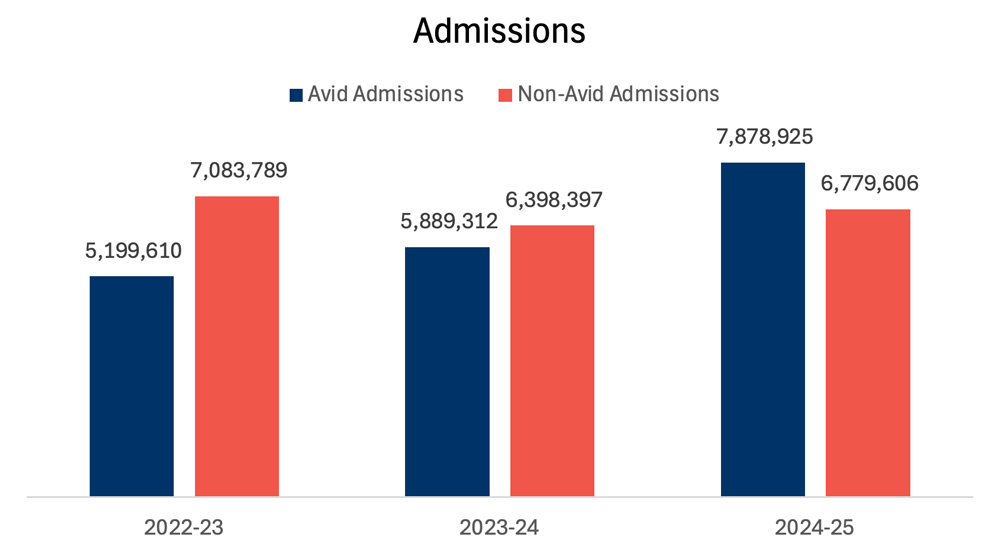
- 84% of ticket growth came from avids [10+ shows/yr] (2M out of 2.4M)
- Only 2% more non-avids purchased tickets this year than last
- Nearly 1,000,000 more tickets were sold to tourists
- 900K more tickets were bought this year by tourists after they arrived in NYC
- 16% more tickets were sold to suburbanites this year
- 48% of newer (<4 months) shows’ tickets are bought by tourists
Marketing Implications
Avids have their own sources of information for deciding what shows to see, which suggests the largest growth segment was likely not driven by advertising.
- Digital advertising targeted to pre-arrival tourists did not increase sales from last year, and that portion of ticket sales—relative to the entire market—declined. Conversely, influencing both tourists and locals during the week they are deciding can increase a show’s chances of selling them a ticket.
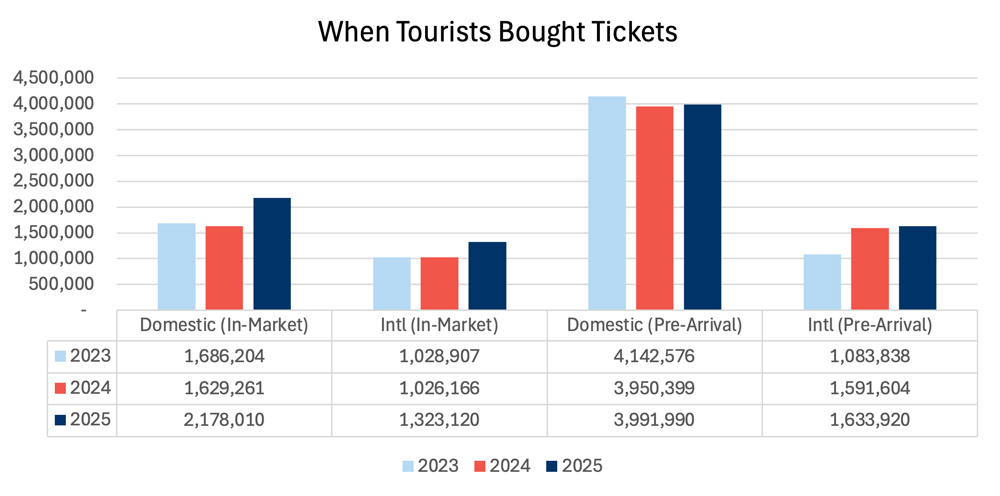
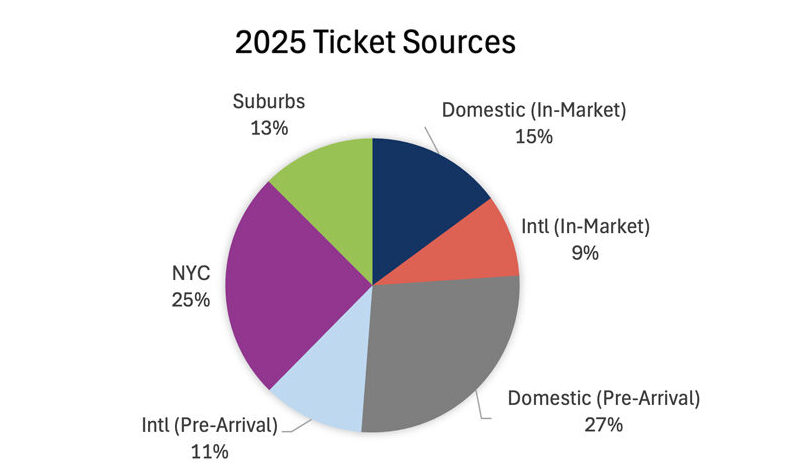
- Allocating advertising investments in proportion to market size can help maximize sales more efficiently. Tourists account for 62% of ticket sales and metro NYC residents account for 38%; notably, the split is also 62/38 when comparing pre-arrival tourists and in-market tourists. Put differently, NYC residents and in-market tourists purchase roughly the same number of tickets. (If you exclude avids, tourists represent a significantly larger influenceable segment.) The question is whether advertising budgets reflect that reality.
Strategic Factors
Most marketers agree that ROAS is increasingly unreliable as a guide to a digital campaign’s effectiveness. Misattribution of conversions and algorithm bias are likely contributors to why the data might be misleading. Industrywide over investment based on ROAS reporting might help explain why the non-avid audience isn’t growing.
Advertising works best when it previews how a ticket buyer envisions how she’ll feel after enjoying the production. That “worth it” factor is most credibly communicated by describing the experience—not by gushing quotes, show longevity statements, or non-credible superlatives.
AI is here, it has transformed how people acquire information to make decisions. GEO (Generative Engine Optimization) must be part of every marketing strategy, and traditional search behavior—where Google keywords consume substantial budgets they don’t drive ticket sales—cannot be relied on the way it was in the past.
City Guide Influences Tourists’ Buys
Guests in almost every Manhattan hotel read City Guide for guidance on what shows to see. With editorial, photography, comparative listings, and theater maps, it functions as an easy, trusted way to compare Broadway options and understand which shows feel “worth it.” This media provides shows with a platform to present their highlights to non-avid tourists at the exact moment they’re deciding—an audience many productions need to connect with to sell more tickets.
As always, I am happy to connect and share the rich data we have compiled to provide great insights—or anything else Broadway marketing-related. Reach out to me at
[email protected].
David Miller
CEO
Davler Media/City Guide